The background of Ukrainian public opinion during the war
The changes in public opinion in Ukraine following the onset of the full-scale invasion by the Russian Federation in 2022 were somewhat paradoxical. Despite the invasion marking the toughest period of the war for the Ukrainian state, Ukrainians' assessments of socio-political issues shifted dramatically for the better. This change encompassed various aspects, including the country's economic condition, attitudes toward the state leadership, and the importance of the democratic trajectory in the country's development.
One of the popular hypotheses explaining these changes is the "rally 'round the flag effect", which describes the consolidation of the population around political leaders and central government bodies during defining crises, which undoubtedly include a full-scale war. If we accept this explanation, then, for the second time, the phenomenon of "rally 'round the flag effect" manifested itself in early 2025 when the President of Ukraine, V. Zelensky, entered into a public dispute with the President of the United States, D. Trump, in the White House. After that, similar to 2022, several socio-political assessments of the population rose sharply. Meanwhile, many other aspects of public life continued to differ significantly from the social processes we observed at the onset of the large-scale invasion.
The Institute of Sociology of the NAS of Ukraine has its own methodological developments suitable for tracking the state of public opinion in general, including the “GSR-5” scale (authored by Doctor of Sciences in Sociology Serhii Dembitskyi), which aims to determine the general background of public opinion in the country. In fact, its development began with the need to record the overall level of positivity and negativity that characterize public opinion during a specific period of time. From an academic perspective, this need arises from the hypothesis of a general background of public opinion, within which other more specific issues of general public life will be evaluated. As public opinion becomes more negative, respondents will lean towards negative assessments, and the opposite holds true as well.
The “GSR-5” scale was developed in 2020, and since 2021, it has been included in the annual sociological monitoring “Ukrainian Society”, conducted by the Institute of Sociology of the NAS of Ukraine since 1994. The results from 2021 demonstrated a pronounced socio-political negativism that characterized public opinion, while the next measurement in May 2022 (the data was collected free of charge for the Institute by the Sociological Group “Rating”) recorded significant improvements. It aligns perfectly with the hypothesis of the “rally 'round the flag effect” effect.
Below are the specific results from applying the “GSR-5” scale over the past four years, which will enhance the understanding of changes in public opinion during a grueling war (a description of the surveys is provided in the appendix to this material).
Results for the instrument indicators. The GSR-5 scale consists of five questions and summarizes the answers to them. These questions include the assessment of the activities of central authorities, opinions on Ukraine's future, evaluations of living conditions for most of the population, the balance of Ukraine's achievements and failures since independence, and satisfaction with events in the country. Based on the responses to all questions, a conclusion is drawn about the respondents' attitudes, ranging from distinctly negative to distinctly positive.
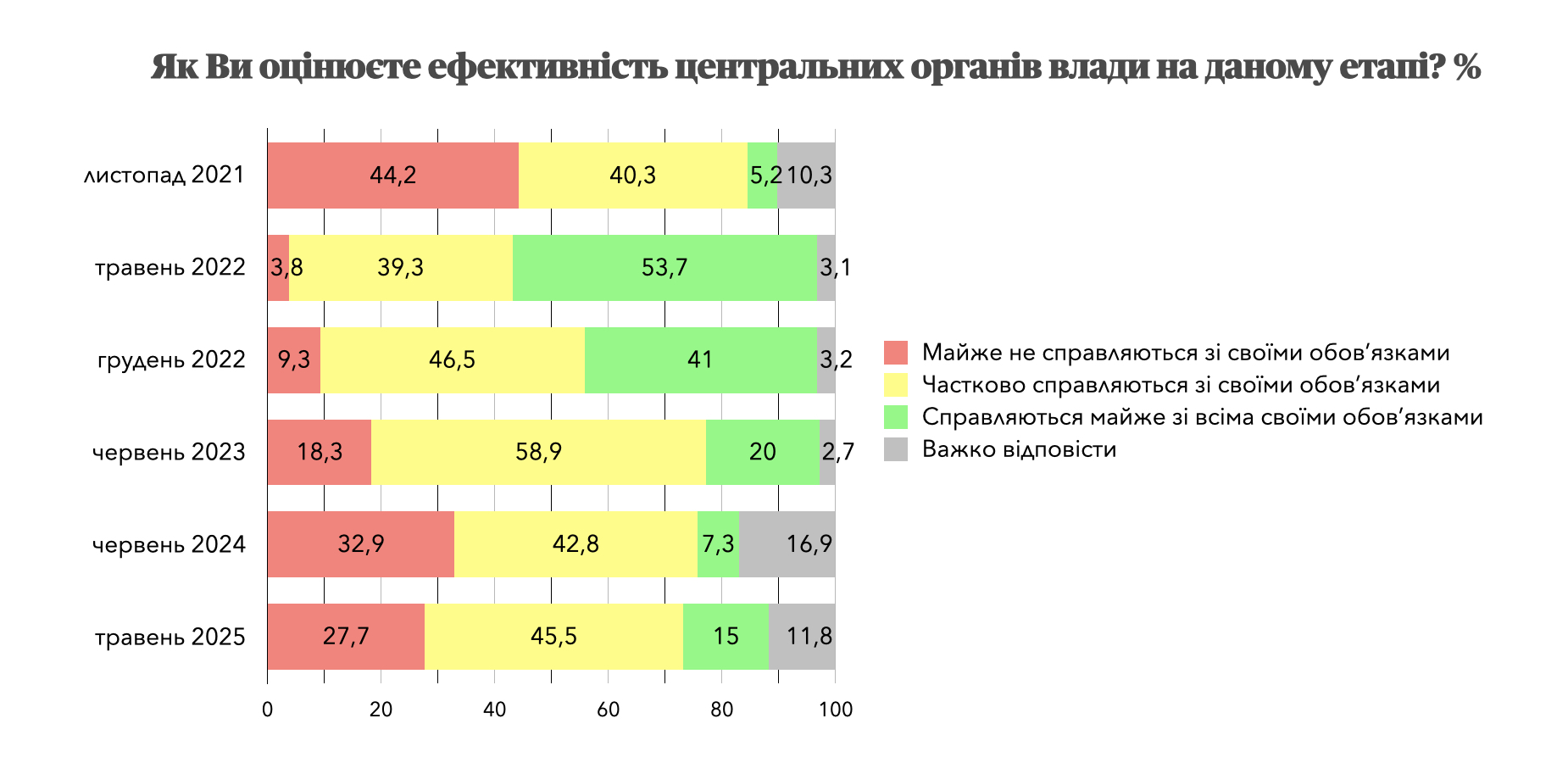
On the eve of the full-scale invasion, negative and intermediate views dominated the assessments of the effectiveness of central authorities. However, in the first half of 2022, the vast majority of the population rated the authorities positively, with those providing negative assessments comprising less than 4%! Subsequently, evaluations gradually declined up to and including 2024. In May 2025, the ratings had improved slightly compared to the previous year, but there were no significant changes.
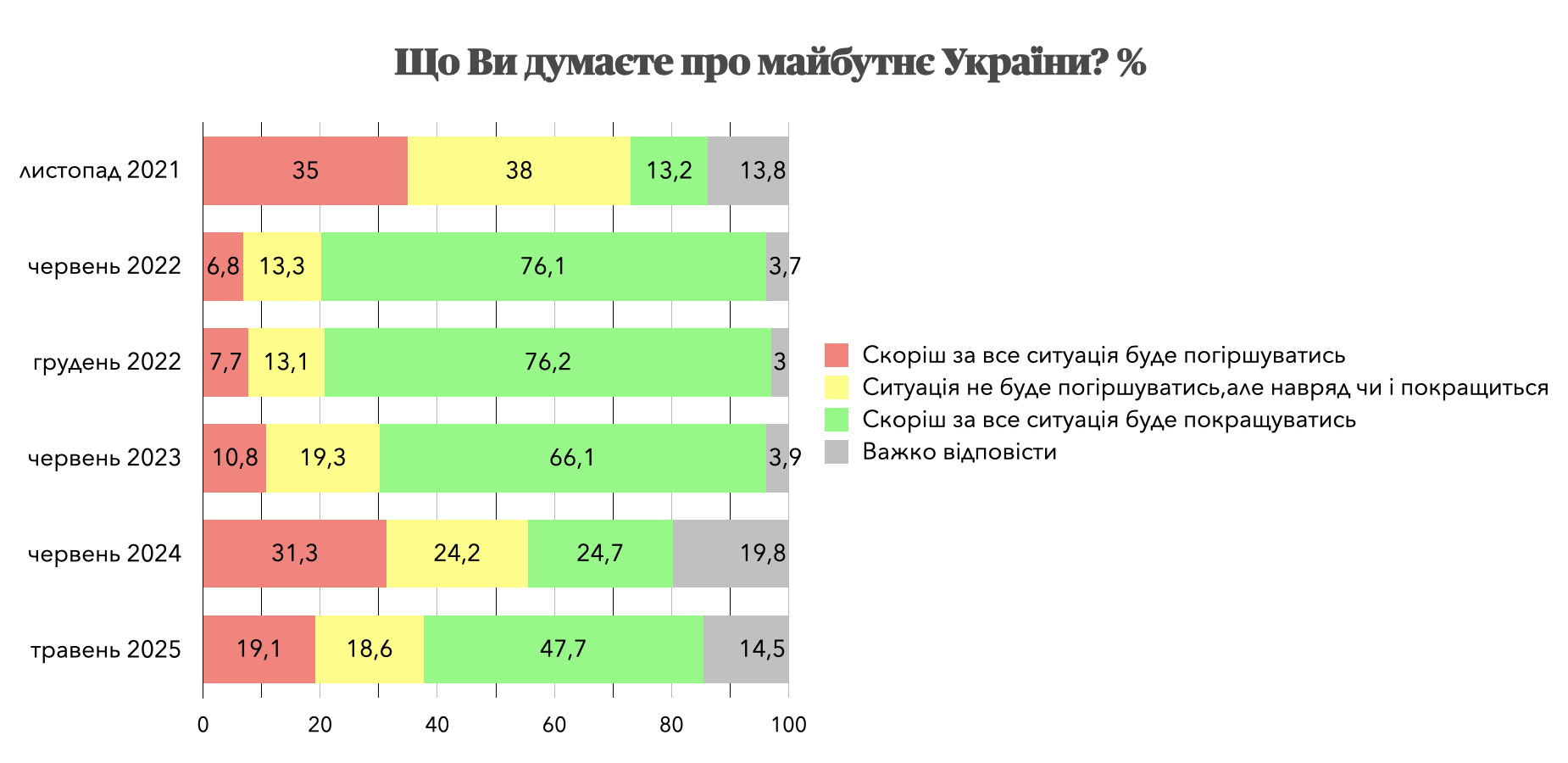
The most significant factor in positive changes was the social optimism of Ukrainians, which in 2021 characterized only 13.2% of the population. Negative and intermediate assessments continued to hold a key position. Throughout 2022, optimistic views were typical of three-quarters of the population. Despite a decline in optimism in 2023, it remained shared by a significant number of Ukrainians—two-thirds. Although in mid-2024 we recorded a substantial “erosion” of optimism due to negative and intermediate assessments, by May 2025, it had once again become decisive for nearly half of the population.
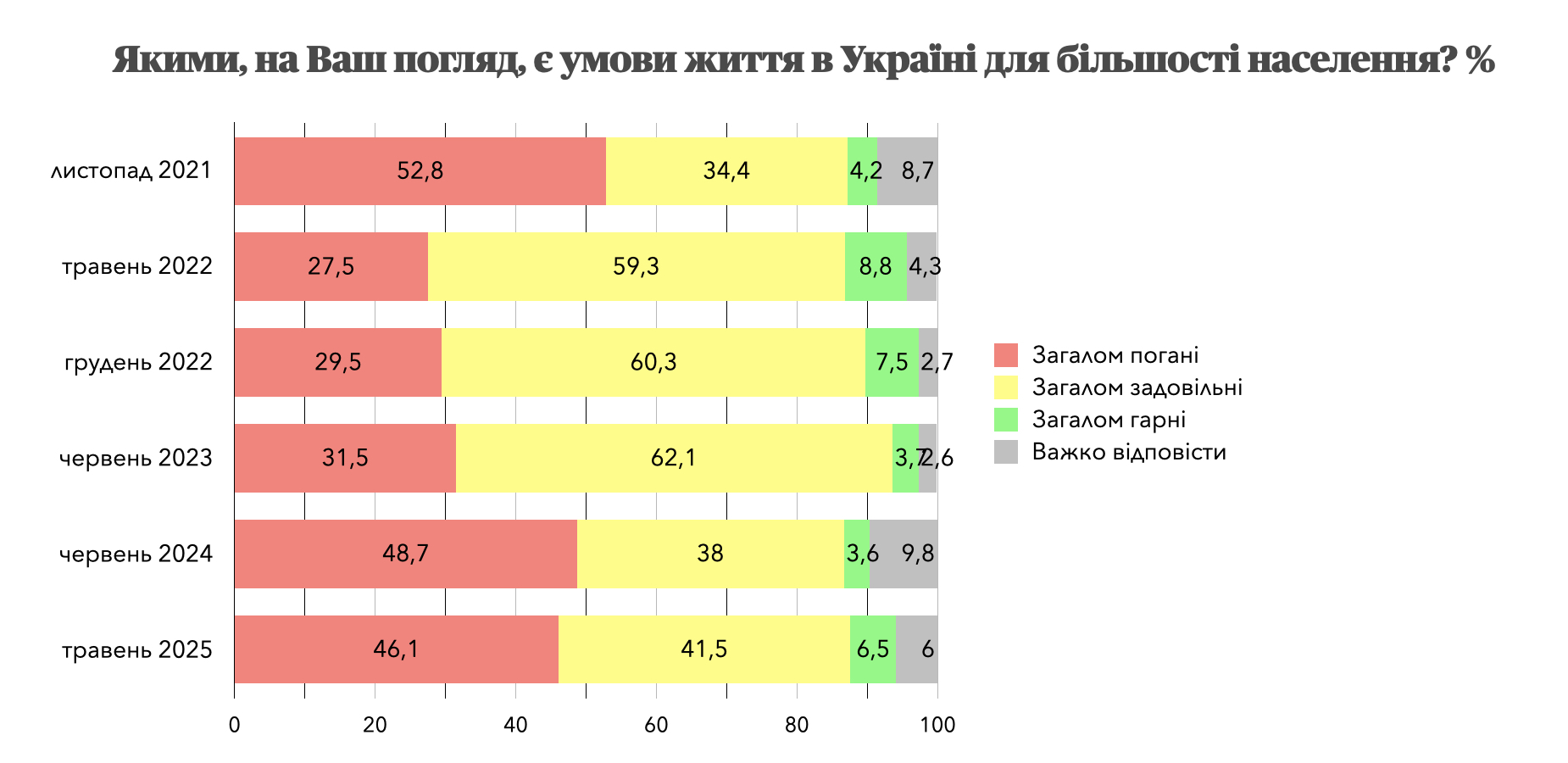
Paradoxically, at first glance, assessments of living conditions for the majority of the population in the country improved during the devastating war. While in 2021 the absolute majority considered them generally bad, by 2022 and 2023, they were deemed generally satisfactory. However, the trend towards negative assessments returned starting in 2024, albeit to a slightly lesser extent than in 2021.
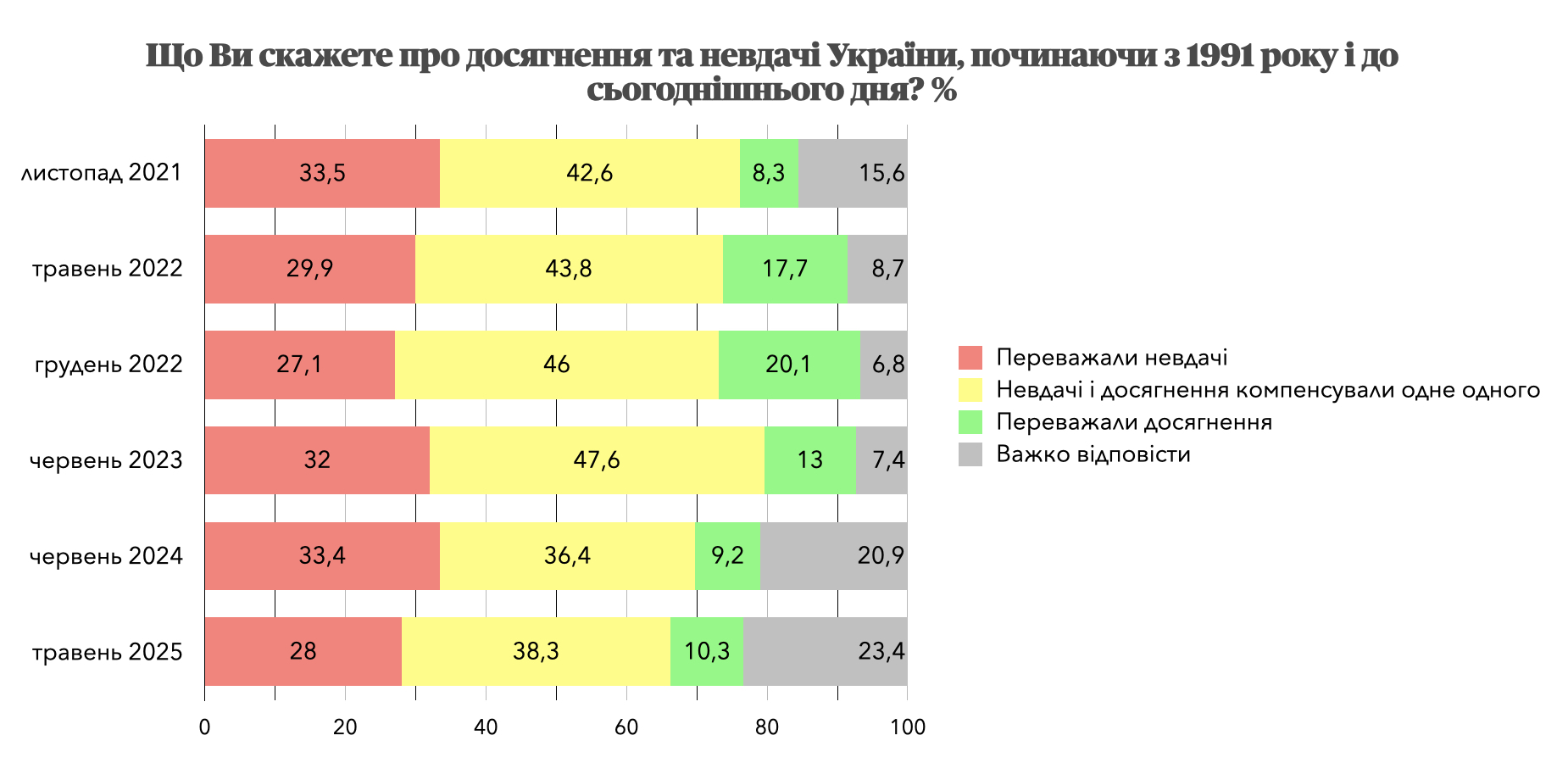
The most stable question, based on the responses received, concerned the ratio of achievements to failures of independent Ukraine. A relative majority of responses across all measurements indicated that failures and achievements balanced each other out. To a somewhat lesser extent, respondents felt that failures were more prevalent. Positive or uncertain responses were noted even less frequently. It is noteworthy that the number of uncertain responses increased in 2024 and 2025.
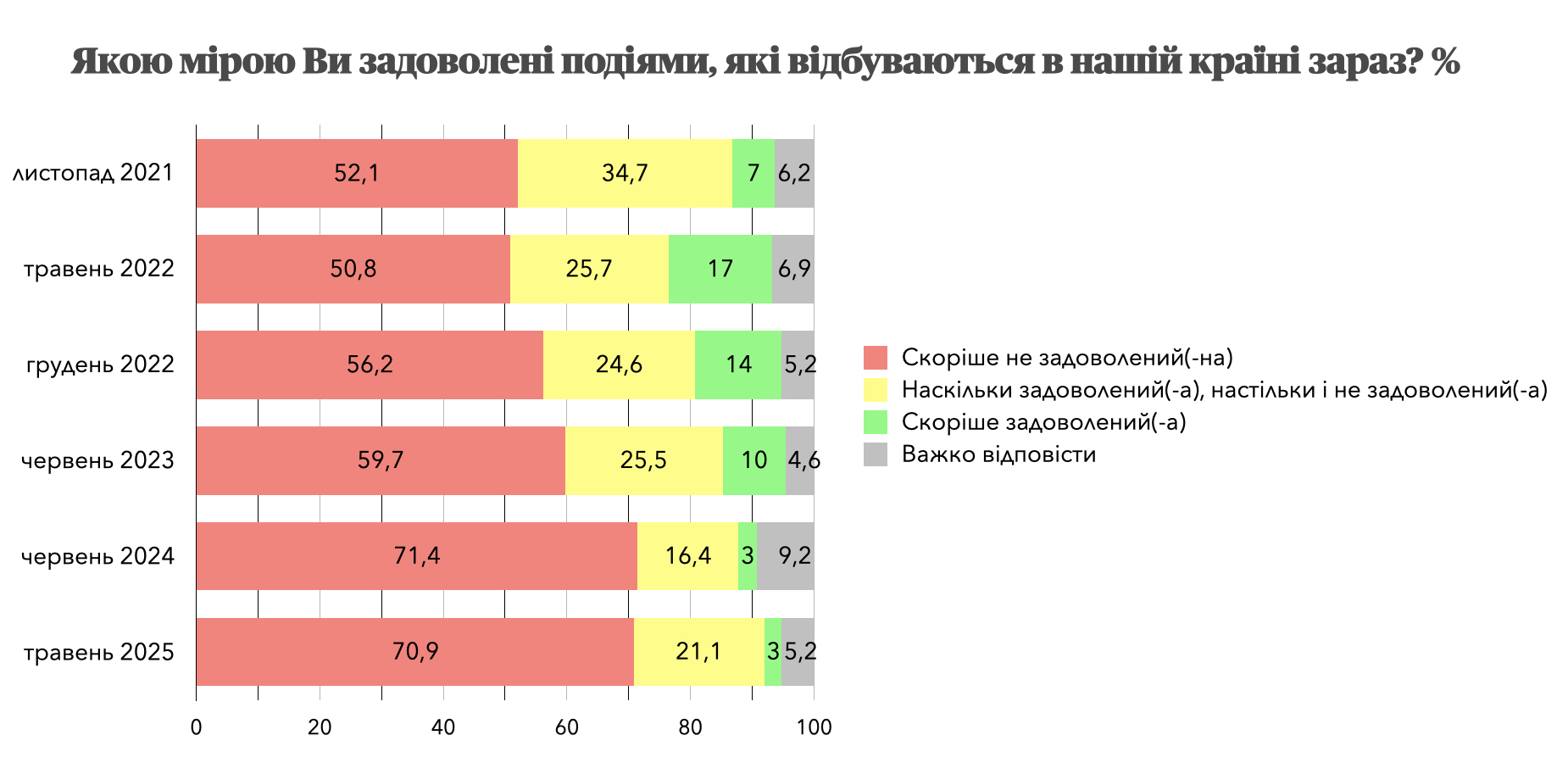
Ultimately, the most negative evaluations across all metrics were noted regarding satisfaction with events in the state. However, even in 2022, some improvement in responses can be observed. Similar to the question concerning the failures and accomplishments of the Ukrainian state, we also see a degree of stability in these results. Nonetheless, this stability is somewhat undermined by the rise in negative assessments in 2024.
All the changes presented can be explained by the events, decisions, and circumstances that Ukrainian society has faced over the past four years. However, I refrain from interpretations and suggest that readers formulate their own explanations. This will serve as a good exercise for the sociological imagination.
General attitudes. In addition to the data presented, the following outlines the general attitudes of the population regarding the functioning of the state (these attitudes should not be confused with assessments of the value of one’s own state as such – they differed significantly in 2024). They are determined for each respondent based on their responses to individual questions of the scale and demonstrate their contribution to the general background of public opinion – negative, intermediate, or positive.
At the end of 2021, a notably negative background of public opinion was evident. Two-thirds of respondents exhibited either clearly negative or moderately negative attitudes. The war shattered this prevailing negativism, showing Ukrainians that even in such challenging circumstances, the Ukrainian state continues to function and rebuild in response to new challenges.
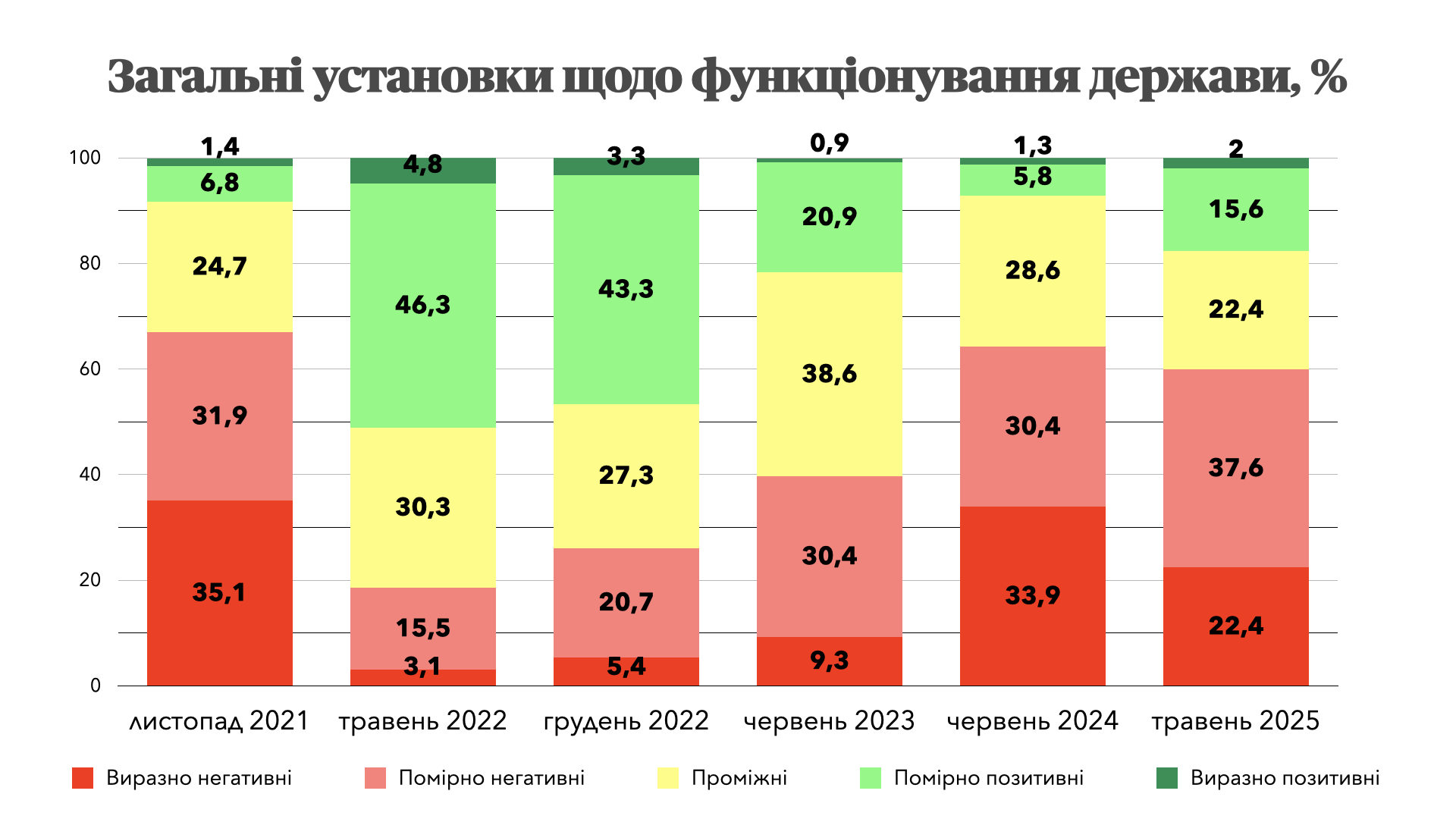
As of May 2022, negative attitudes decreased by more than threefold, while positive attitudes increased sixfold. Thanks to these significant changes, positive assessments dominated in 2022, and the number of intermediate assessments surpassed the number of negative ones. In 2023, respondents offering positive assessments represented a minority, and the counts of intermediate and negative assessments had nearly equalized. In 2024, respondents with negative assessments constituted the clear majority. It is noteworthy that the distribution became almost identical to what it was at the end of 2021. Therefore, in 2024, considering the overall background of public opinion, Ukrainian society returned to its “usual” state in less than three years after the onset of the large-scale invasion.
Finally, it's time to return to the effect of “rally 'round the flag effect”, which was repeated in 2025. As seen in the last graph, it had a positive but limited effect. First, the number of positive attitudes nearly tripled compared to 2024. Second, in the negative spectrum of assessments, moderately negative attitudes began to dominate over distinctly negative ones. It’s clear that these changes occurred due to a significant increase in social optimism among Ukrainians. The beginning of the diplomatic process aimed at ending the war can be considered the reason for this shift. However, alternative explanations for the recent changes can be provided.
Appendix
All results were obtained through representative surveys of the population of Ukraine using a random sample, which were conducted by order (No. 1, 3, 4, 5, 6) or at the request (No. 2) of the Institute of Sociology of the National Academy of Sciences of Ukraine. The characteristics of the surveys are provided in the table:
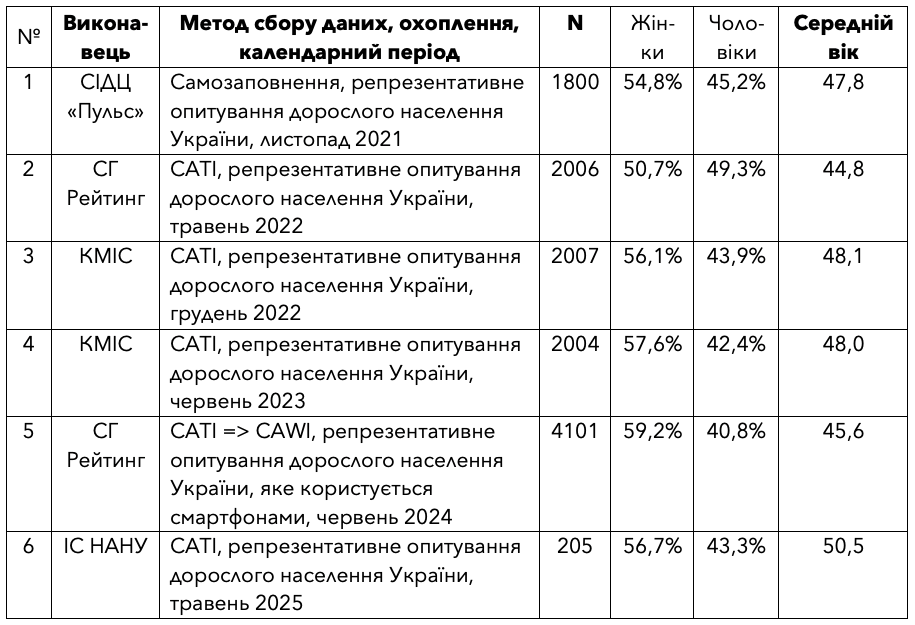
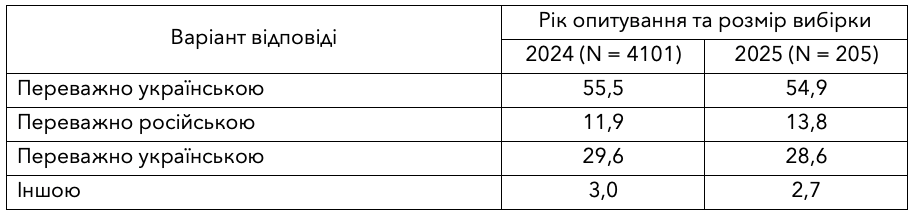
The last survey was conducted on a sample that is significantly smaller than the samples from the other studies presented in the table. However, the results obtained, particularly those presented in this material, suggest that they can be considered sufficiently reliable. As a control indicator, considering its stability over time (the latest changes occurred after the full-scale Russian invasion), the question “What language(s) do you mainly communicate in your family (at home)?” can be used, %: